
Nonfiction passages are powerful tools for building reading comprehension, but for struggling readers they can feel overwhelming. But that doesn’t mean we should avoid informational text. The goal is to scaffold nonfiction text effectively so all students can access grade-level content. There are many ways to scaffold informational text in so that all of your students can reap the positive outcomes and meet grade level standards in 3rd grade.
Benefits of Using Nonfiction Passages for Struggling Readers
Science is naturally engaging for elementary students, so incorporating science into literacy instruction increases student interest and curiosity. This is especially important for struggling readers. With science passages, they start to get excited about their reading rather than dreading it because of the challenges it brings.
On top of that, informational text features can help struggling readers navigate texts more easily, and science nonfiction passages are full of those helpful clues.
Science and literacy integration has been proven to help all students retain reading skills. It improves both science and literacy outcomes for students.
When used effectively, science passages allow for meaningful vocabulary development, enhanced comprehension, and improved critical thinking skills.
Why Nonfiction Text Can Be Challenging for Struggling Readers
Informational text requires different skills than narrative reading. These skills are relatively new for all 3rd graders as they shift from learning to read to reading to learn.
Students must:
- Navigate headings and more complex informational text feature
- Learn and process domain-specific vocabulary
- Identify main ideas and supporting details
- Understand cause-and-effect relationships
- Analyze and draw conclusions on what they read
Without support, struggling readers may focus only on decoding and miss the meaning entirely. Science topics can sometimes feel intimidating for struggling readers as well. Using the following scaffolding strategies enable these crucial skills more achievable and accessible for struggling readers.
Strategy #1: Activate Background Knowledge Before Reading
One of the most effective scaffolds happens before students even read.
Before reading a new informational passage, try one (or all!) of the following strategies:
- Show a related image or diagram
- Show a related image or diagram
- Ask what students already know
- Do a whole class What I Know/What I Wonder chart
- Refer to previous lessons, experiments, or passages
- Have students turn and talk to a partner about their background knowledge
This simple and small step significantly improves comprehension.
To take this strategy a step further, use a relevant “hook” to get students super engaged before the reading starts.
For example, before reading about animal adaptations, ask students to look at their fingertip closely. What do you see? Tell them that those tiny ridges that create our fingerprints are actually adaptations that help us survive. Fingerprints help us grip slippery objects better. And just like humans, other animals also have special body parts that help them survive.
Try to get students interested in the topic while activating prior knowledge to prepare students for the nonfiction passage. A fun fact, an interesting photo, or a short movement activity are great options to try.
Strategy #2: Chunk the Text Into Manageable Sections
Struggling readers often feel overwhelmed by a full page of informational text. Instead of assigning an entire page at a time, scaffold nonfiction passages by having students:
- Read one paragraph at a time
- Pause to summarize
- Ask students to explain what they understood
Then ask students, “What was this section mostly about?” and “What new information did we learn?”.
Nonfiction passages that are written with short, focused paragraphs make chunking much easier. When passages are intentionally designed for differentiated nonfiction reading, scaffolding feels natural rather than forced.
Strategy #3: Model How to Use Text Features as Support Tools
Many struggling readers ignore common text features like headings, diagrams, captions, and bold vocabulary.
Teach students to rely on these features by modeling the process of using text features to improve understanding.
For example:
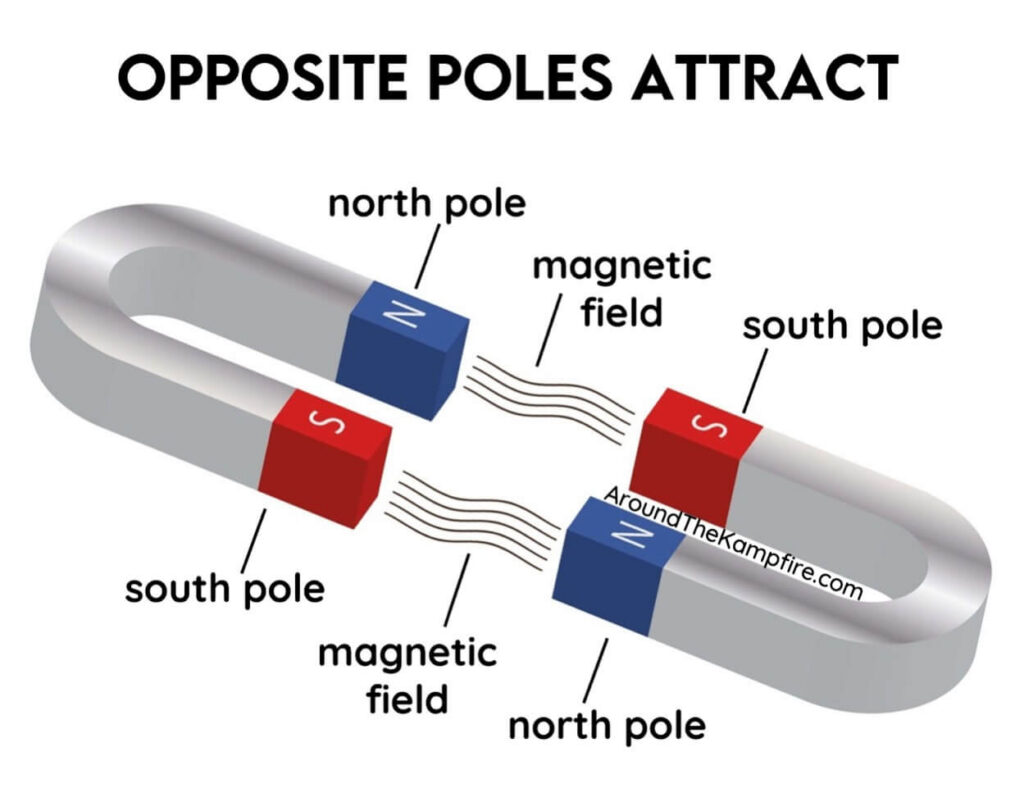
- Study the diagram before reading the paragraph.
- Use the caption to clarify the image.
- Pause at bold words and check the glossary.
I find think alouds to be the most effective way to model using text features in my classroom (more on that later!). Using text features as support tools can often be more of a mental process, so thinking aloud the steps is the most relevant way to model this.
When differentiated nonfiction reading passages include meaningful visuals aligned directly to the content, students can lean on them as comprehension supports. In science passages, diagrams often explain processes like the water cycle or food chains more clearly than text alone. High-quality science reading passages for 3rd grade typically embed these features intentionally, making them ideal for modeling.
Strategy #4: Provide Sentence Frames for Discussion and Writing
Struggling readers often understand more than they can express in writing.
Provide structured sentence starters such as:
- The text explains that…
- One reason is…
- According to the diagram…
- I think _______ because …
- I learned…
- I still wonder…
Sentence stems like these allow students to focus on their comprehension of concepts instead of sentence construction.
If your differentiated nonfiction reading resource includes built-in comprehension questions, you can pair those questions with sentence frames for additional support.
Strategy #5: Use Close Reading Strategies With Science Passages
Rereading is a powerful tool for struggling readers. Focusing on different skills for each read of a text gives a new purpose for reading each time.
The first read of the text should almost always be to get a general idea of the concepts. But no one can fully understand all aspects of a text with just one reading.
On the second read, focus on one skill, like:
- Identify the main idea
- Find cause-and-effect relationships
- Locate supporting details
- Analyze text features
Because science passages are content-rich, each reread can highlight a different comprehension skill.
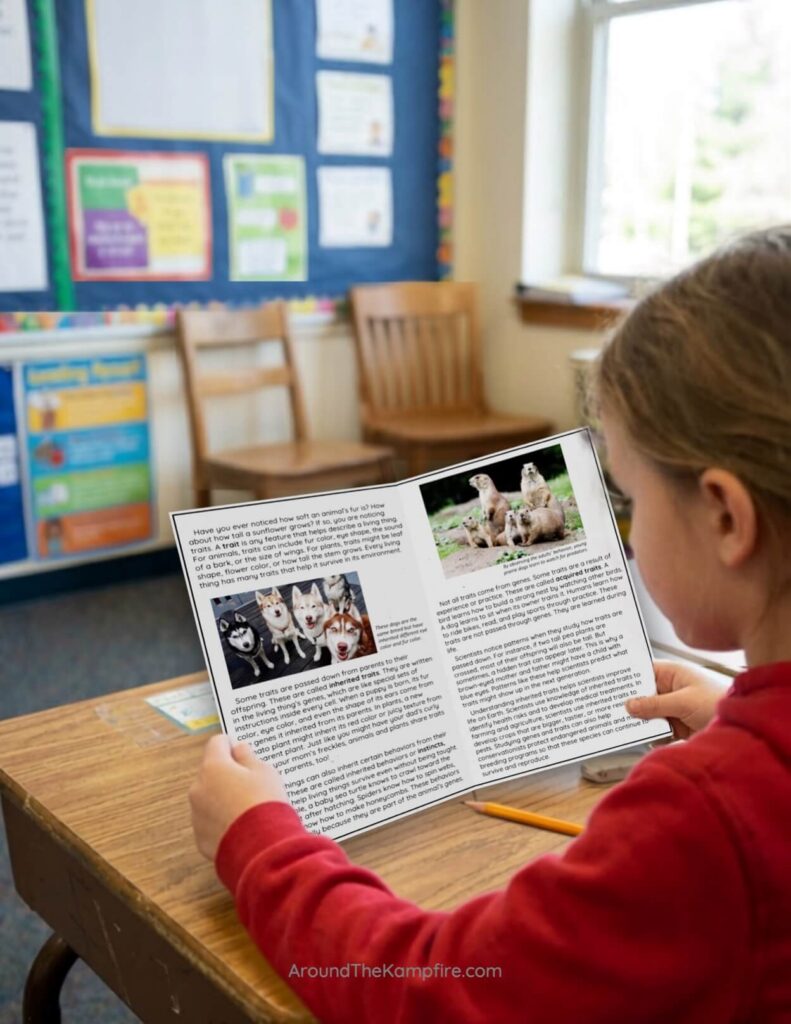
In my classroom, the third reading is usually focused on answering specific comprehension and text-based questions.
Using a cohesive set of nonfiction reading passages allows you to spiral these skills throughout the year while maintaining consistent formatting and structure.
Strategy #6: Utilize Tiered Texts to Build Background Knowledge
One of the biggest barriers for struggling readers is limited background knowledge. If students don’t understand the topic, even strong reading strategies become difficult to apply.
A helpful solution is to scaffold nonfiction passages by using tiered science texts.
This means introducing multiple passages on the same topic at different levels of complexity. Students begin with a simpler text to build familiarity with the concept before moving into more challenging, grade-level reading.
For example, when teaching ecosystems:
- Start with a short, highly supported passage introducing habitats and food chains.
- Move to a more detailed article with academic vocabulary and deeper explanations.
- Finish with a grade-level science passage that requires students to synthesize information independently.
This gradual progression builds confidence while strengthening comprehension.
Tiered texts are especially effective in 3rd grade because they allow struggling readers to access the same science concepts as their peers without becoming overwhelmed immediately.
Strategy #7: Pair Nonfiction Passages with Hands-On Science Activities
Sometimes students struggle with informational text because the concepts feel too abstract. Pairing reading with simple hands-on science activities helps make learning concrete.
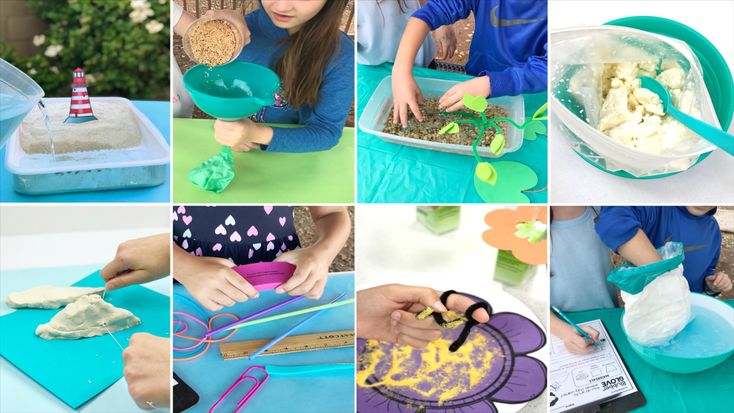
For example:
Hands-on learning supports comprehension because students are not just reading about science, they are experiencing it.
This approach to scaffold nonfiction passages also increases engagement, strengthens background knowledge, and improves retention of scientific concepts
After completing the activity, students often return to the science passage with much stronger understanding.
Strategy #8: Pre-Teach Science Vocabulary Before Reading
Informational texts are filled with unfamiliar academic vocabulary, and too many unknown words can overwhelm struggling readers. Previewing a few essential vocabulary terms before reading can dramatically improve comprehension.
Focus on:
For example, before reading a passage about the water cycle, you might preview words like:
Discuss meanings briefly and connect them to visuals or real-world examples.
Pre-teaching vocabulary helps:
Strategy #9: Use Think-Alouds to Model Critical Thinking While Reading
Struggling readers often don’t realize what skilled readers are thinking while they read.
That’s why think-alouds are so powerful.
A think-aloud is when the teacher verbalizes their thinking process, talking students through how to approach texts and concepts. This explicitly teaches students how to interact with informational text.
Think-alouds help students learn how to:
This improves both comprehension and metacognition, as students begin recognizing when they understand something and when they need to reread or slow down.
For example, while reading a science passage about adaptations, you might say:
“The text says the Arctic fox’s fur changes with the seasons. It uses camouflage to blend into its habitat. I’m noticing that the photograph shows Arctic foxes with white fur in the snow. The other photo shows the fox with brown fur in the grass. That helps me understand how camouflage can keep animals safe. I bet predators would not be able to see it very well. The fox’s prey also would have a hard time seeing it coming. How amazing!”
This models how strong readers combine text evidence and visuals to build understanding.
Science passages work especially well for think-alouds because informational texts naturally require students to analyze diagrams, vocabulary, and cause-and-effect relationships.
Modeling what to do when students are confused about something is just as important. Using our Environments & Survival science passage called Living Fossil: The Story of the Horseshoe Crab:
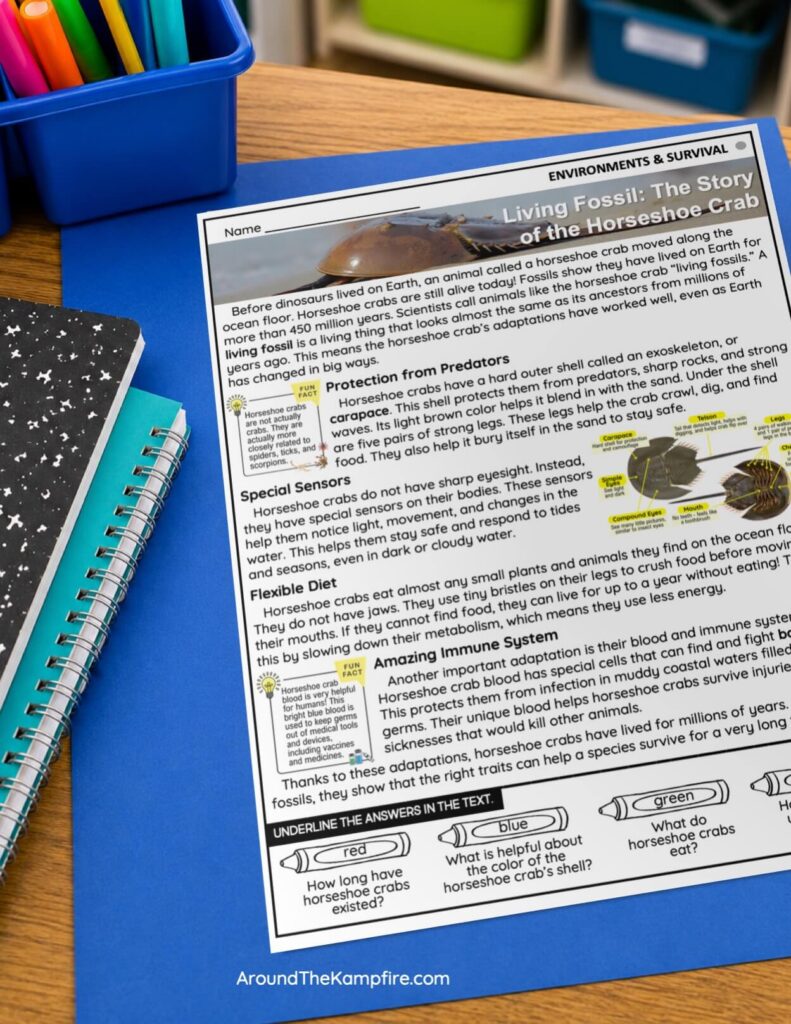
“Hmm, the text says horseshoe crabs are protected by a carapace. I see that the word carapace is bold, so it’s probably important for me to understand it. But I’m still not exactly sure what it means. Let me look at the other text features to see if they help me understand it better.
The diagram shows the horseshoe crab’s body parts. Oh, there’s the word carapace again! Let me look closer. It says the carapace is a hard shell for protection and camouflage.
The image shows that the carapace is covering the top of the horseshoe crab. It reminds me of a turtle’s shell. That’s probably a very helpful adaptation for keeping horseshoe crabs safe!”
Using thoughtfully structured 3rd grade science reading passages makes think-alouds more effective because the text features and organization provide multiple opportunities to model comprehension strategies as well as characteristics of informational texts and how to use them.
For example, I might model how to use new types of informational text features in our horseshoe crab text like this:
“Wait, I’ve never seen a text feature like this one before. It’s a box with words in it. It says Fun Fact at the top. Fun Fact? I wonder how that might help me understand this text.
Let’s see…there’s a Fun Fact box next to the paragraph about horseshoe crabs’ immune systems. It says: Horseshoe crab blood is very helpful for humans! This bright blue blood is used to keep germs out of medical tools and devices, including vaccines and medicines. Wow, that is pretty interesting.
But the text is mostly about horseshoe crab adaptations and how they have survived for so long. Does the information in the Fun Fact box tell about how horseshoe crabs survive? Not really, but it is a cool fact. It helps me understand how powerful the horseshoe crab’s germ fighting abilities are. But it doesn’t seem to relate to the main idea of the passage.
I still need to read these boxes, because they can help me understand things better. They just might not help me as much when it comes to the main idea. Let’s see if that’s true for the other Fun Fact box.”
I’m sure you can see how talking through your thought process can be crucial when it comes to scaffolding informational texts for struggling readers. It’s an extremely important strategy to implement!
Strategy #10: Provide Graphic Organizers
Graphic organizers help struggling readers process information visually instead of relying entirely on dense text.
In science reading, graphic organizers can help students:
For example:
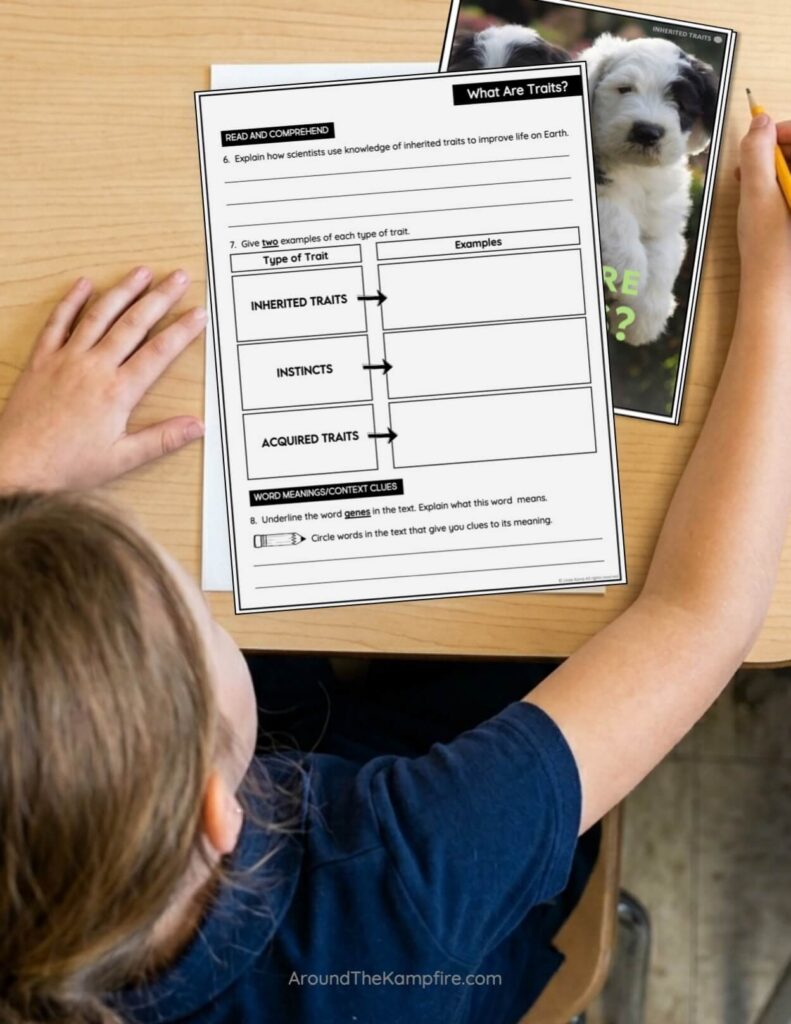
Visual organization helps students break large amounts of information into manageable pieces. Graphic organizers are especially effective after reading because they encourage students to synthesize and organize what they learned from the text.
When paired with engaging science informational passages, graphic organizers help students move beyond surface-level reading and toward deeper scientific understanding.
Maintaining Rigor While Providing Support
Scaffolding does not mean lowering expectations. Having support while interacting with grade-level informational texts helps students build stamina and confidence. Choosing accessible but rigorous differentiated nonfiction reading passages helps maintain that balance.
What to Look for in Passages for Struggling Readers
If you want nonfiction texts that support struggling readers, look for:
A comprehensive collection of 3rd grade reading passages can help streamline this process by providing consistent structure across topics like ecosystems, weather, fossils, and animal adaptations.
Why We Scaffold Nonfiction Passages for Struggling Readers
In 3rd grade, students transition into more independent reading. If they struggle with informational text now, that gap widens over time. By intentionally scaffolding informational text passages, you help students:
When science and literacy are integrated thoughtfully, both improve. Science passages and other nonfiction texts do not need to be intimidating for struggling readers. With structured support, students can access meaningful, grade-level content.
Pin this post to come back to when you need to scaffold nonfiction passages for your struggling readers!




Leave a Comment