
With the shift from learning to read to reading to learn in 3rd grade, informational texts become a crucial element in the classroom.
Teaching informational text features in 3rd grade is right up there with teaching main idea—it’s one of the most important standards to prep students for success in future grades (and in real life, too).
While you can use standalone texts to teach informational text features, it’s more effective to pull in relevant, interesting, and relatable passages that allow students to build knowledge while applying reading comprehension skills.
That’s why I use science articles to improve reading comprehension in the elementary grades.
In this post, you’ll learn:
Why Science Articles Are Ideal for Teaching Informational Text Features
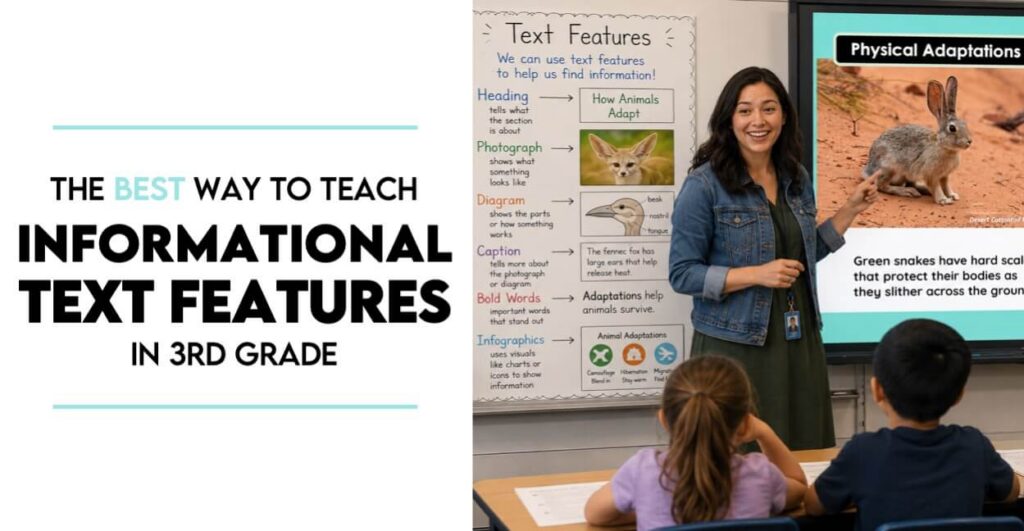
Science texts naturally include meaningful nonfiction text features 3rd grade students need to know, such as:
In fiction, illustrations are often decorative. In science, diagrams and captions are essential for understanding the text and the concepts.
For example:
A labeled water cycle diagram shows movement that paragraphs alone cannot fully explain.
A food chain chart visually clarifies relationships within an ecosystem.
A caption beneath a fossil image provides context that supports and deepens comprehension.
Students begin looking at and analyzing text features more when they realize it can actually make understanding the text easier. Science passages provide a great resource for building those analytical and critical thinking skills we are always encouraging our students to apply.
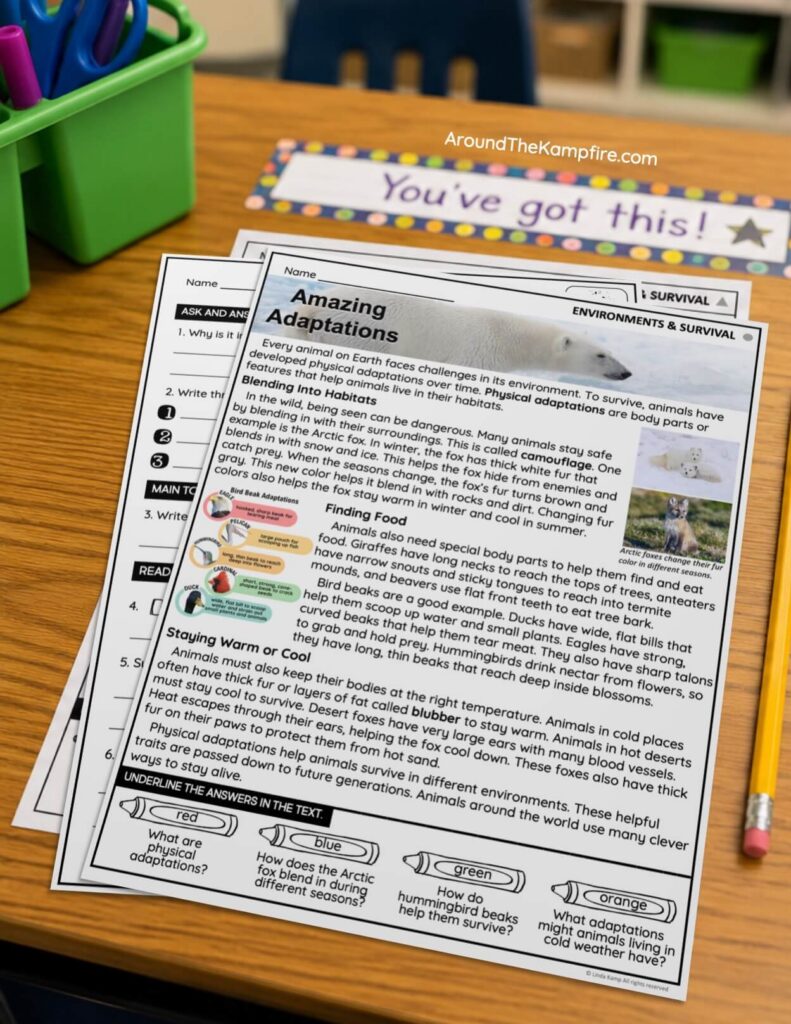
Using a sequence of high-quality science articles for 3rd graders makes a difference, too. When students encounter similar text structures over and over again, they build confidence navigating nonfiction texts. That’s especially important in 3rd grade because students are just beginning to focus on learning through reading (rather than learning to read).
The Most Important Nonfiction Text Features 3rd Grade Needs to Learn
While students may encounter many nonfiction text features 3rd grade should highlight these:
Headings & Subheadings
Teach students how headings help organize information into different focus areas about the same overall topic.
Labeled Diagrams
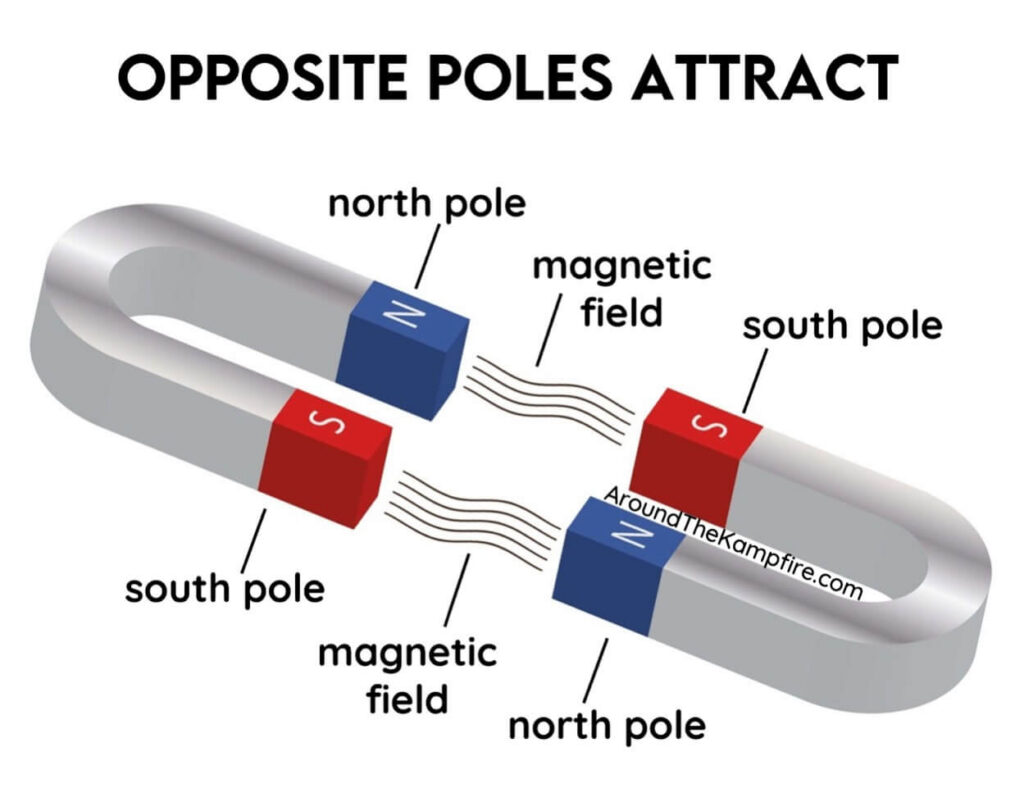
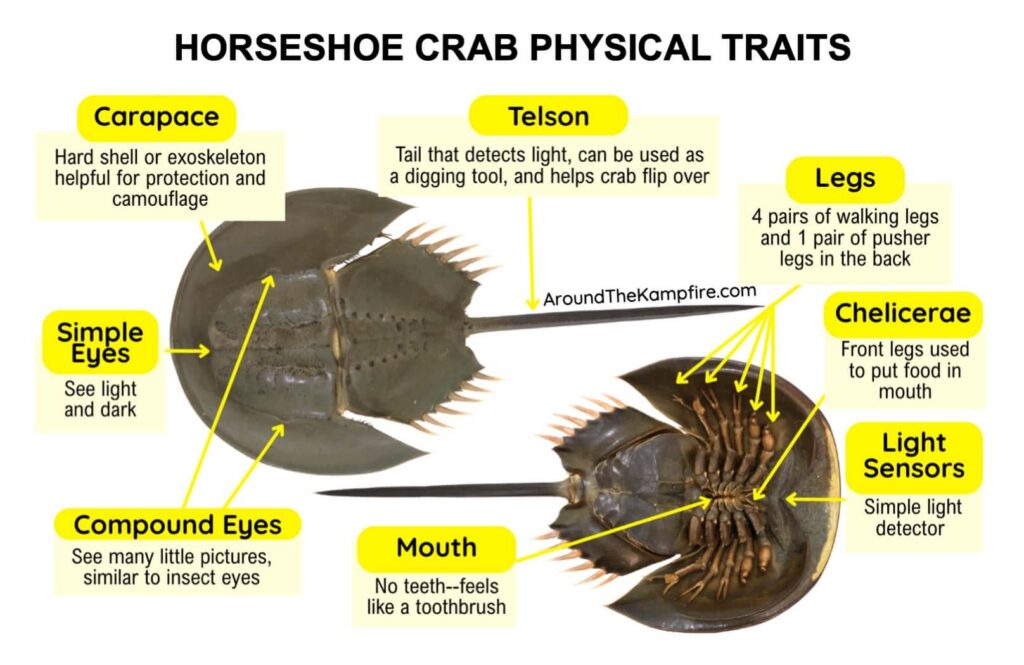
Show students how visuals clarify processes, structures, and relationships.
Photographs
Explain how photographs can expand on how the topic looks or how it relates to the real world.
Captions
Explain how captions provide additional detail beyond the image.
Infographics

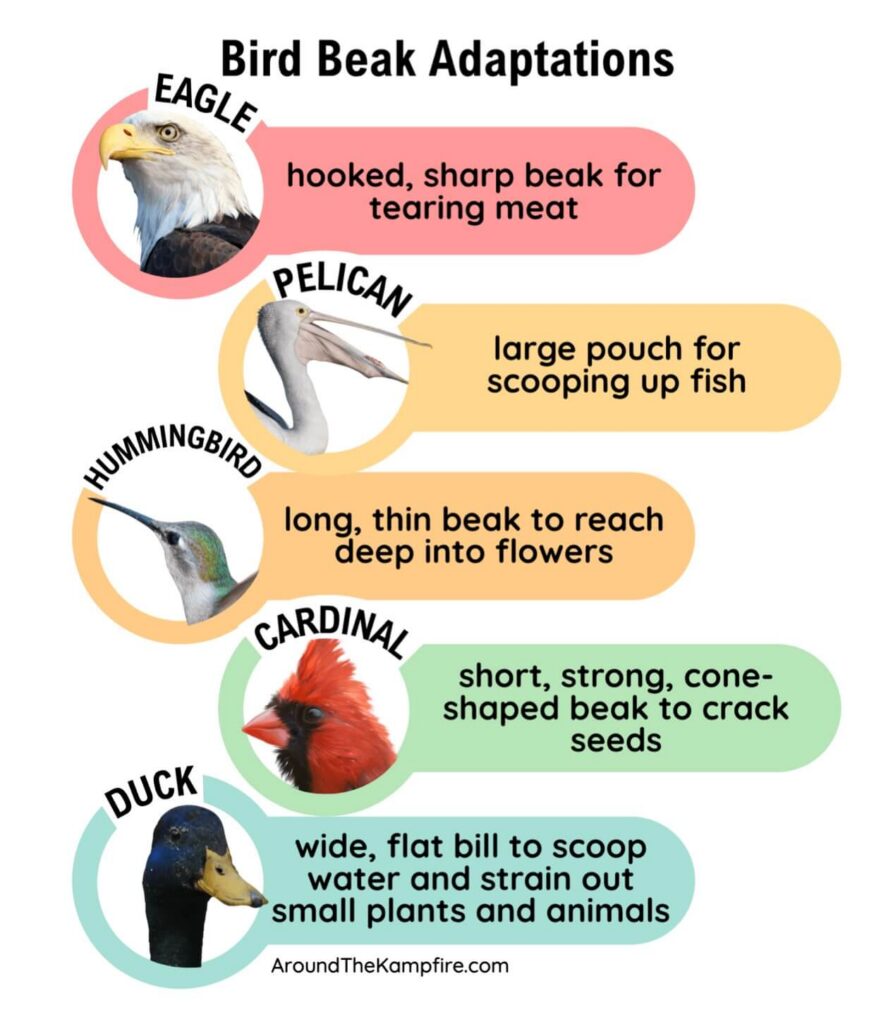
Teach students that infographics are visual tools that explain or summarize important information quickly. They can make complex ideas or texts easier to understand and digest.
Bold Words and Glossaries
Model how to pause and use definitions to strengthen comprehension.
Graphs & Charts
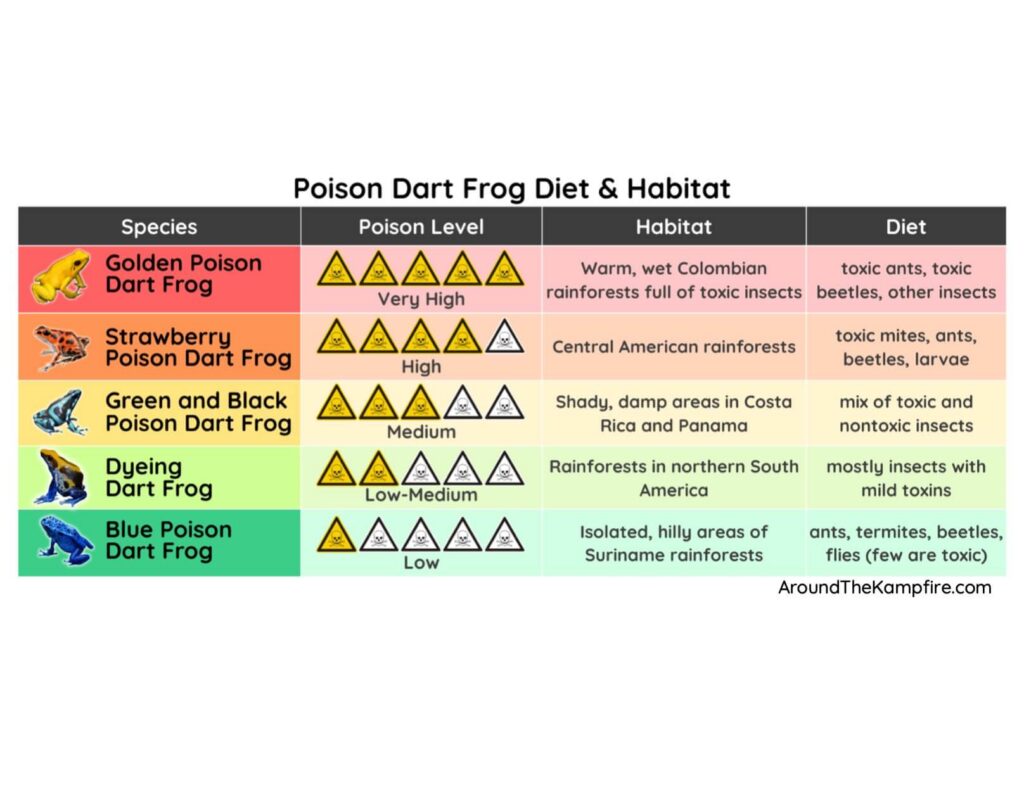

Describe different types of graphs and charts and tell how they can organize large amounts of data or information visually. Teach about components to different graphs, like titles, keys, and axes. This is an excellent opportunity for a cross-curricular math lesson!
High-quality science articles for 3rd graders often include all of these elements within each article, allowing repeated exposure throughout the year.
A Simple Routine for Teaching Informational Text Features
The great thing about using science passages for teaching informational text features is that it boosts engagement and saves you time by integrating literacy into your science block (or vice versa).
Try embedding a simple routine that looks like this to teach and reinforce nonfiction text features:
Before Reading: Preview the Features
Ask students to:
Then ask:
Previewing is an essential aspect of any reading routine. It helps give students a purpose for reading and it preps them to explore the topic at hand.
During Reading: Pause and Analyze
I recommend reading the text through completely for the first read. That way students get a basic understanding of the concepts in the science article, and they can dig deeper into the text the next time they read.
During the second reading:
For example, in a science passage about magnetism, a labeled diagram of magnetic poles provides visual reinforcement of the written explanation.
When passages follow a consistent format with clear headings, structured paragraphs, and aligned visuals, modeling the process and building independence for students becomes much easier.
Teachers often find that using a cohesive set of leveled informational passages reduces prep time because the nonfiction features are already thoughtfully embedded.
After Reading: Reflect on How Features Supported Understanding
Reflection strengthens independence and reinforces skills.
Ask:
Identifying text features is important, but using those text features strategically and thinking critically about them is even more crucial in 3rd grade and beyond.
If your science passage resource includes comprehension questions that reference text features directly, students get built-in guided practice without extra prep work for you.
Choosing the Right Science Passages for Text Feature Instruction
As you plan your informational text features lesson, look for science articles for 3rd graders that have:
These science articles for 2nd and 3rd graders teach a variety of informational text standards and science standards throughout the year. Along with teaching nonfiction text features in 3rd grade, science passages are also great for teaching main idea, sequencing, cause-and-effect, and text-based questioning.
Teaching informational text features in 3rd grade becomes even more meaningful (and engaging!) when students use those features to understand real science content and science phenomena.
Science articles provide authentic opportunities to analyze headings, interpret diagrams, and apply vocabulary strategies.
When you consistently integrate science passages into your literacy block, students strengthen comprehension while building essential content knowledge, and your instruction becomes more efficient in the process!
Save this post for reference when you’re planning on teaching informational text features!




Leave a Comment