
Imagine this: Your students have perfected the simple sentence. They can identify the subject and predicate and write using capital letters, spaces, and punctuation. Now, it’s time to start writing even better sentences by introducing compound sentences. Here’s your complete guide on how to teach compound sentences to your students!

Simple vs. Compound Sentences Explained
- Simple Sentence: A simple sentence expresses one complete thought. It has one subject and one predicate.
- Compound Sentence: A compound sentence joins two simple sentences together using a conjunction.
- Conjunction: Conjunctions are connecting words. I always teach these with the help of the acronym FANBOYS (for, and, nor, but, or, yet, so).

Simple vs. Compound Sentences Examples
| Simple Sentence Examples | Compound Sentence Examples |
|---|---|
| Kyle rakes the leaves into a big pile. | I got pancakes, AND Gina got eggs. |
| Grandma knits by the fire each night. | I want a bike, SO I’m saving money. |
| The students talk and eat lunch. | It is late, BUT the store is still open. |
How to Teach Compound Sentences
When teaching compound sentences, it’s important to explicitly teach conjunctions in isolation and then give your students plenty of time to practice using them. Below, I’ll outline some of my favorite tips and activities I use when teaching compound sentences to my 3rd graders.
Develop a Weekly Routine
No matter which grammar skill I am teaching, I always follow the same weekly routine. My students always know what to expect; it cuts down on my prep time, and it gives students a variety of practice activities.
Mondays start with an introductory PowerPoint, Tuesdays we do partner work, Wednesdays I include a task card game/center, Thursdays are for applying the skill in reading and writing, and the week ends with an assessment.

Keep Practice Activities Consistent
As elementary teachers, we could always use more time in the day. My reading block is jam-packed, and I’m normally left with 15 minutes or so to teach the weekly grammar concept. By keeping the activities consistent, you can really maximize time.
Each week, my grammar activities are similar, which means less time explaining the logistics and more time learning!

Use Visuals and Teaching Slides
When teaching compound sentences, it’s super important to use visuals and teaching slides. When students are able to see the conjunctions and different types of sentences, it’s going to stick! My Monday PowerPoint keeps me and my students on track.

The teaching slides first show examples of simple sentences, then it dives into conjunctions and examples of compound sentences. There are opportunities for students to differentiate the two in the whole group setting!

Complete Word Sorts
Word sorts are a great way for students to apply the grammar skill in a hands-on way! For compound sentences, I have students work with a partner to read a short story. They then differentiate simple from compound sentences using different colors and cutting and pasting.
Play Grammar Games with Task Cards
Task cards are versatile and can be used in a variety of different ways! I like to gamify my task cards to keep students as engaged as possible.
My three favorite games to use during my grammar block are Roam the Room (task cards are placed around the room), 4 Corners (students move to a designated spot in the classroom to select their answer), or timed centers. I rotate between these three each week to keep things exciting!

For compound sentences, the task cards have different types of sentences, and students have to write an S or a C on their recording sheet.
Read and Write with the Grammar Gazette
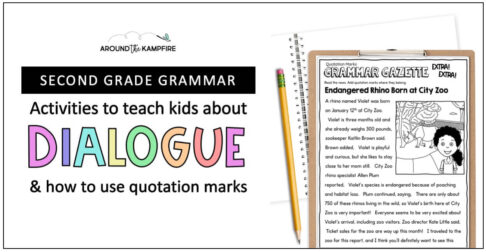
With the help of the Grammar Gazette (a kid-friendly news article), students have the opportunity to apply what they have learned over the last 3 days. When working with compound sentences, students will read the article and identify if each sentence is a compound or simple sentence. They will then get to write their own news article using a mixture of both types of sentences.

Shop This Post

Shop This Post

Books and Videos to Help Teach Compound Sentences
Books and videos are a great way to connect the weekly grammar skill to real-life situations. Below are some great choices when looking to supplement your compound sentences lessons.
1. But and For, Yet and Nor: What Is a Conjunction? (Words Are CATegorical ®)
by Brian P. Cleary
Although you could identify compound sentences in any read-aloud, this one is all about conjunctions and creating compound sentences!
My students always love the funny illustrations in this series.

2. Conjunction Junction
An oldie, but a goodie. You probably remember watching this video when you were in elementary school and then having the song stuck in your head the rest of the day.
I love the use of trains to show that a conjunction job is to connect!

3. Let’s Bring it All Together
Another fun song to use when teaching compound sentences in your classroom! This one also uses the same acronym (FANBOYS) that I use to introduce conjunctions at the beginning of the unit.

4. What is a Compound Sentence
If your students need a bit more direct instruction, this video is great! The speaker touches on all parts of a compound sentence and gives plenty of examples.

Second and Third Grade Grammar Units
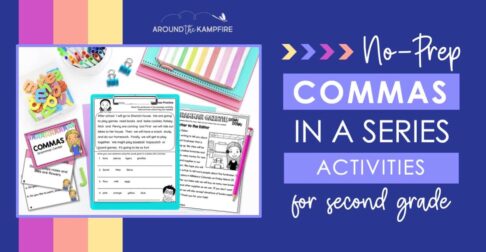
If you are looking for a one-stop shop compound sentence unit, check out my week-long low prep units! I have one for 2nd grade and 3rd grade! Inside, you’ll find lesson plans, all activities I discussed above, and assessments.
For more no prep grammar and reading activities and lesson ideas visit these posts!
- 8 Plural Noun Rules to Teach in Second Grade
- Strategies for Teaching Context Clues
- 5 Types of context Clues to Teach in Third Grade
- Free Grammar Assessment Toolkit
- What Are Adverbs And How Do I Teach Them?
- 5 Fun Sentence Types Lessons
Be sure to pin this post on Pinterest so you have it when you plan!



Leave a Comment