
If you teach 3rd grade, you already know the challenge of teaching multiple subjects with minimal time.
You need to strengthen reading comprehension. You need to teach science standards. You need to keep students engaged. And you don’t always have time for completely separate lesson blocks.
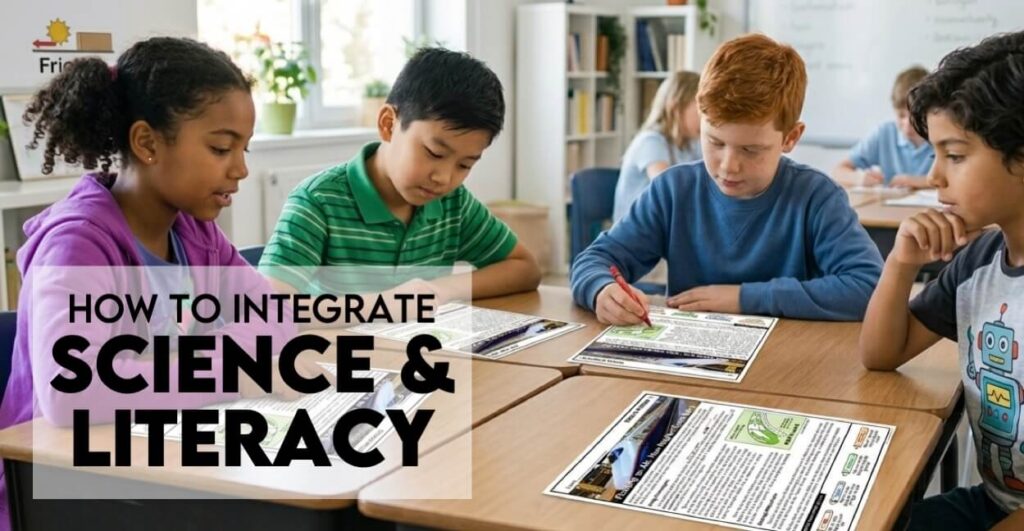
Using science passages to teach reading comprehension allows you to integrate literacy and content instruction in a way that builds knowledge, vocabulary, and critical thinking at the same time.
Why Science Informational Texts Strengthen Reading Comprehension
The research on integrating science and reading instruction is clear and well-documented: Students who receive integrated literacy and science instruction perform better in both areas than those who don’t.
Why? Because cross-curricular instruction has been proven to enhance student engagement, boost critical thinking, and foster deeper, more applicable knowledge and understanding.
Science informational texts are uniquely powerful because they are:
- Content-rich
- Engaging and thought-provoking for students
- Naturally organized with headings and text features
- Vocabulary-driven
When students read about weather patterns, animal adaptations, and fossil formation, they’re building background knowledge. And background knowledge is one of the strongest predictors of reading comprehension success!
Reading Skills You Can Teach Using Science Passages
One of the biggest advantages of science texts is how many literacy skills they can potentially support. Depending on the topic addressed and the organization of the content, science informational texts can aid in teaching many of the critical 3rd grade reading standards.
Main Idea and Supporting Details
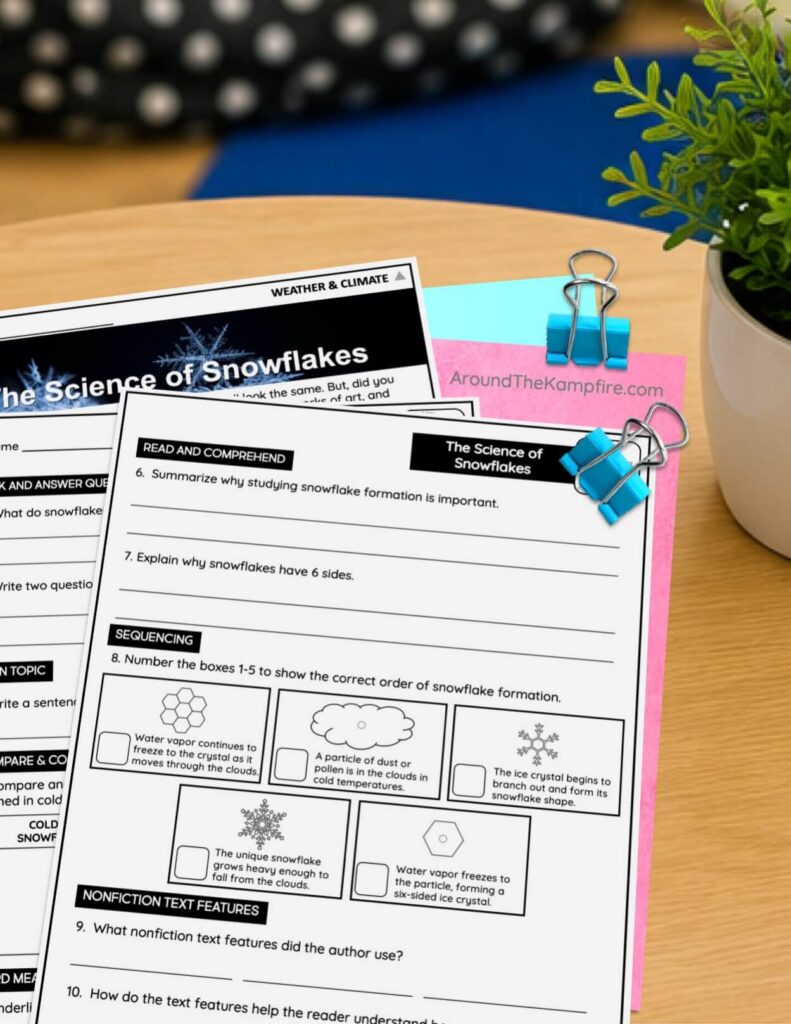
Science passages are typically organized around one concept, making it easier to teach main idea and key details. These passages have a focal point that helps students to see how details connect to a central idea. They also often use elements that give big clues to the main idea, such as headings, bold words, images, and graphics.
Informational Text Features
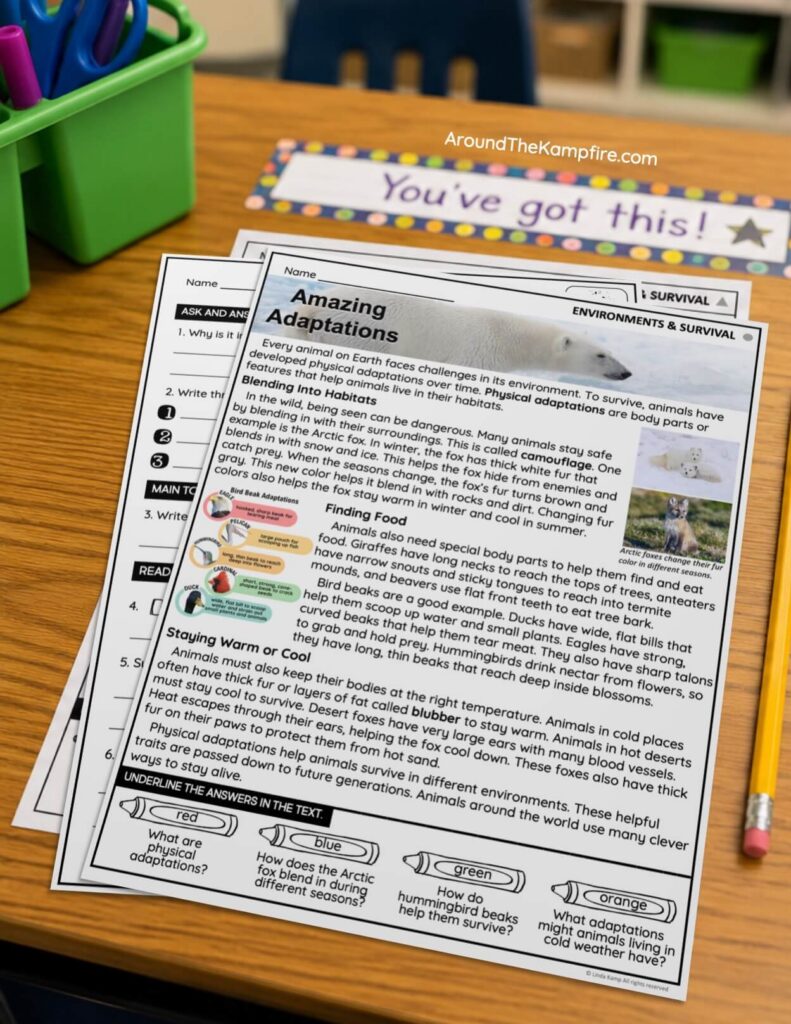
Diagrams, headings, captions, bold words, and photographs are essential in science reading, so using science informational texts is a perfect way to introduce and teach nonfiction text features.
Vocabulary in Context
Science content naturally introduces academic and domain-specific vocabulary. Passages centered around science concepts are often great opportunities for teaching different types of context clues, as well as dictionary skills.
Cause and Effect
Weather events, ecosystems, and life cycles all demonstrate cause-and-effect relationships that are pretty clear and concrete.
Evidence-Based Responses
Students can cite evidence directly from science informational texts to answer comprehension questions.
These reading skills are crucial to develop and practice throughout the entire school year. Using a cohesive set of 3rd grade science informational passages makes skill spiraling simple. Instead of searching for new texts weekly, you can rotate skills while maintaining predictable structure.
A Simple Weekly Routine for Integrating Science and Reading
I love using a structured routine for close reading in my classroom! Routines allow students to become more independent and autonomous with their work. They know what to expect and they gradually learn what is expected of them, allowing them to really take responsibility for their learning.
If you want a system for using science passages to teach reading comprehension that works without constant reinvention, try a weekly routine that looks something like this:
Day 1: First Read for Understanding
Introduce the science topic. Read the passage aloud or independently. Focus on general comprehension.
Day 2: Focus on Structure
Examine headings, diagrams, bold vocabulary, and captions. Discuss how they support understanding.
Day 3: Skill Spotlight
Choose one skill to focus on throughout the week. Main idea, cause and effect, text features, vocabulary/context clues are all important to spend time on. These skills will need to be built on repeatedly throughout the year in 3rd grade.
Day 4: Reread for Evidence
Students answer comprehension questions and cite text evidence. Try using a set of passages like these 3rd Grade Science Informational Texts with evidence-based questions included.
Day 5: Written Response or Extension
Students explain concepts using evidence from the passage. Open-ended questions that promote critical thinking can provide a great opportunity to incorporate writing skills into your week.
Alternatively, the last day of the week would also be a great day to bring the week’s science concepts to life with a short and exciting hands-on science activity. When you pair science experiments with reading passages, you allow students to further build their background knowledge and verify what they’ve learned in their reading. It’s a fun and helpful way to keep students engaged in your weekly routine!
Why Integrating Science and Reading Matters
In 3rd grade, students shift from learning to read to reading to learn.
When literacy instruction is disconnected from content, students miss opportunities to build knowledge. Teachers miss opportunities to garner student buy-in and engagement.
When science informational texts are used intentionally:
Integrating science and reading helps us maximize our time in the classroom. Since science content naturally increases students’ curiosity, integrating these subjects is also a perfect solution for keeping students engaged in their literacy instruction.
How to Choose Effective 3rd Grade Science Passages to Teach Reading Skills
High-quality science reading passages for 3rd grade strike the balance between accessibility and rigor. When texts are too complex, students focus on decoding rather than comprehension. When they are too simple, they don’t build critical thinking skills.
In order for integrating science and reading instruction to be successful, each lesson or passage should build on the previous one. Effective science passages to teach reading skills should be structured, coherent for students, and cumulative.
Look for passages that:
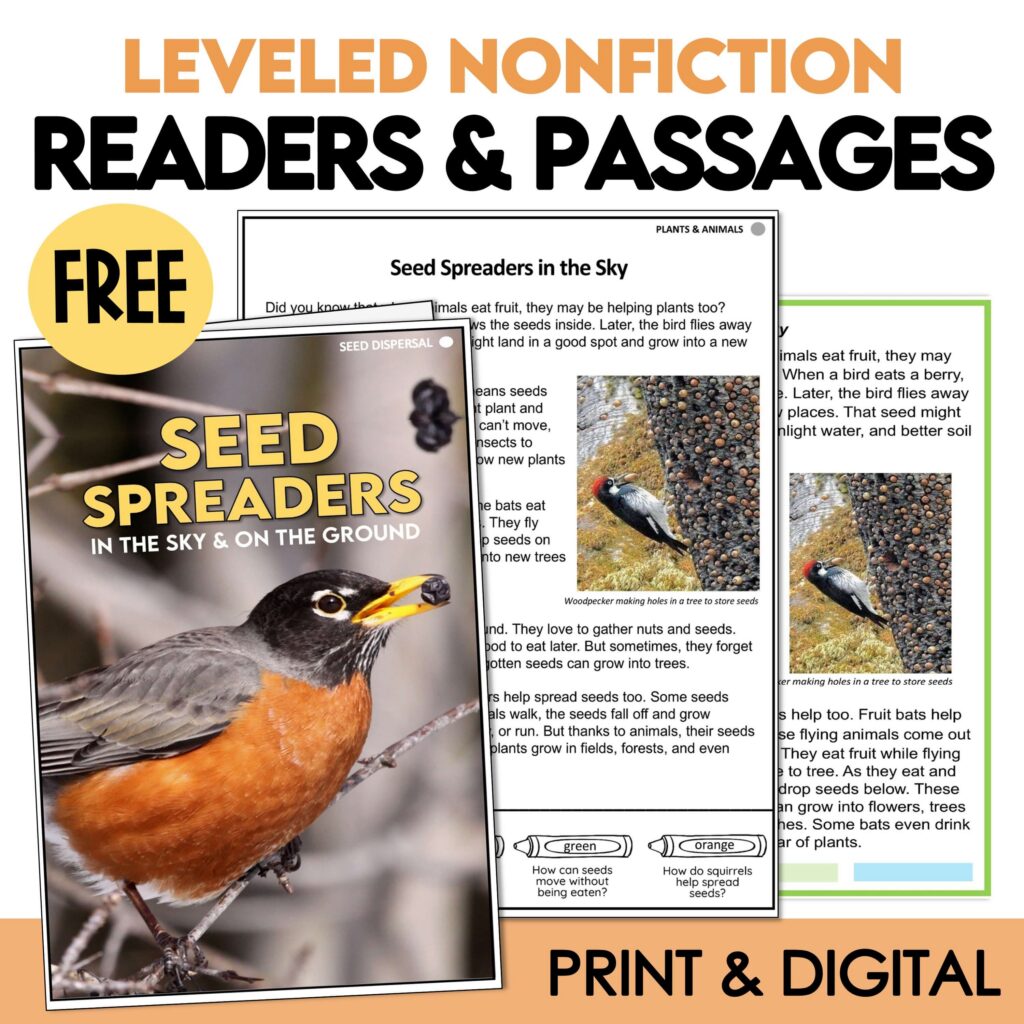
Free Leveled Nonfiction Readers & Passages
Grab this free set of leveled reading passages to help your students strengthen their nonfiction comprehension.
Supporting Struggling Readers With Informational Texts
Informational passages can absolutely work for struggling readers!
I find that in a third grade classroom, there are many accommodations that benefit all of my students when it comes to nonfiction, informational and science texts. This is especially true during initial lessons.
Accommodations could include:
When passages are designed with strong formatting and built-in supports (like differentiated reading levels and clear comprehension questions), scaffolding becomes even easier.
A comprehensive 3rd grade science passage collection can help you maintain grade-level expectations while providing appropriate support.
Ready-to-Use Science Passages for 3rd Grade
If you’re looking for:
- Engaging science reading passages
- Clear informational text structure
- Built-in comprehension questions
- Printable and digital options
- Topics aligned to upper elementary standards
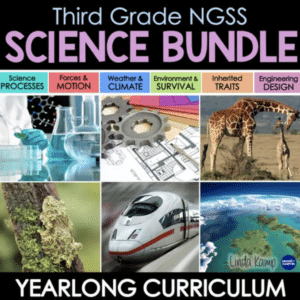
These 3rd Grade Science Informational Passage Bundles were designed to support exactly this kind of integrated instruction.
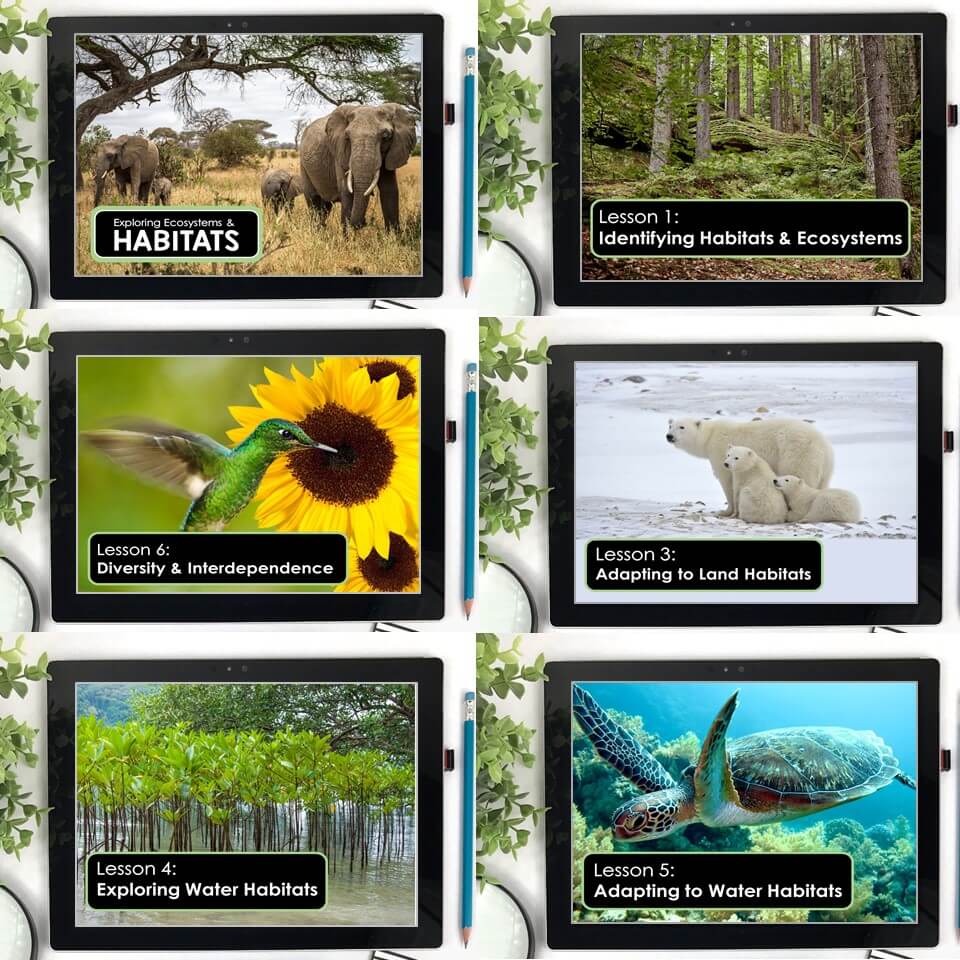
Each passage focuses on one clear science concept and includes structured text features to support comprehension skills like main idea, cause and effect, and vocabulary development.
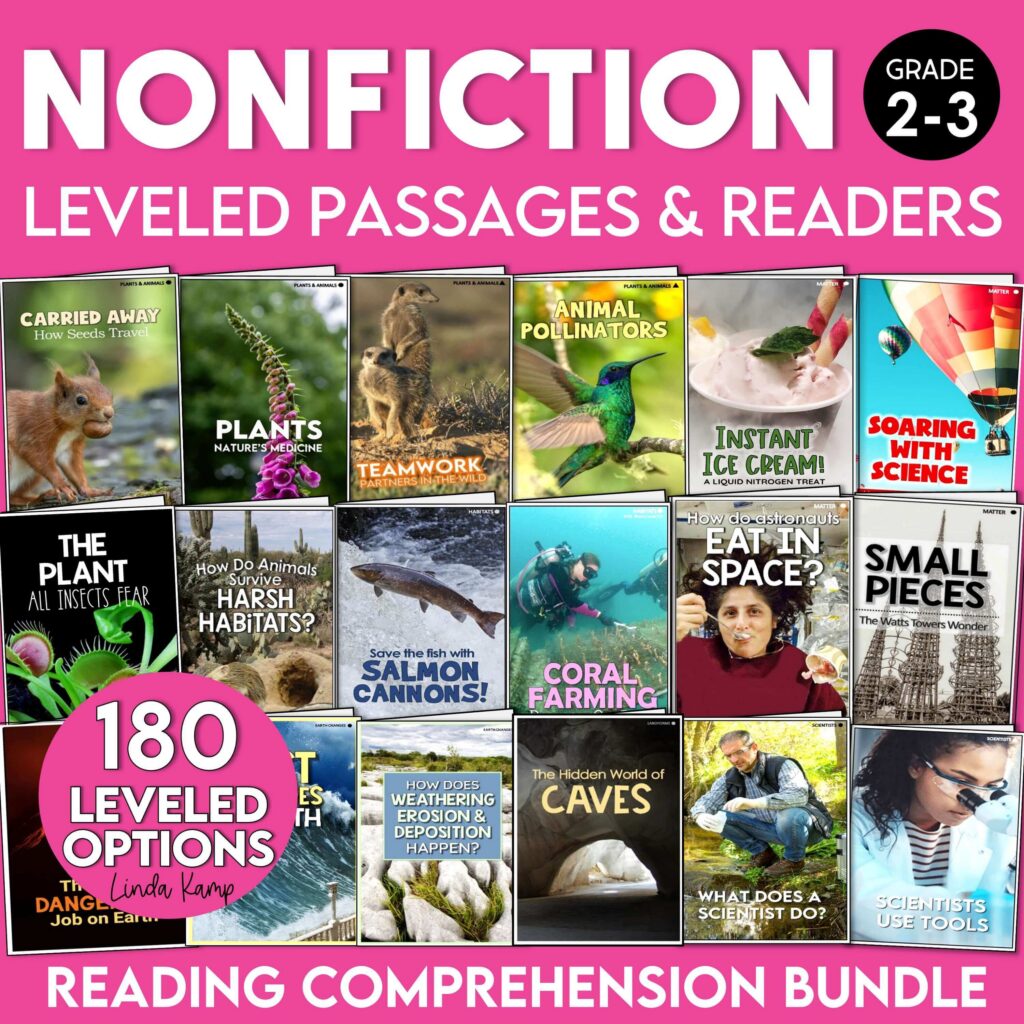
When you use well-structured science passages, you can strengthen your instruction in both science and reading comprehension in 3rd grade.
Students gain meaningful, applicable knowledge.
They practice essential nonfiction skills.
And you build a predictable instructional routine that saves time.
Save this post to come back to as you plan your integrated science and literacy lessons!



Leave a Comment