
The scene is all too familiar: a quiet, orderly classroom suddenly descends into a chaotic (and very loud) parade the moment the bell rings for lunch or recess. Hallway management can be one of the most challenging parts of the school day. How can we get dozens of energetic kids from Point A to Point B without disturbing neighboring classrooms or looking like a moving circus?
The key isn’t necessarily tougher discipline; it’s higher engagement. The solution lies in creative strategies that invite students to manage themselves. By turning a simple walk into a shared game or a secret challenge, we can transform stressful hallway chaos into a smooth, even enjoyable, routine.

Hallway Management Strategies: How to Keep Your Class Quiet in the Hall
Although we all wish we could simply walk out the door and arrive at point B with zero trouble, we ALL know this isn’t the case. And I know that every class is different, and what works for one may not work for another; however, I encourage you to give each one of these hallway management strategies a chance!
Here are four fun hallway management strategies to help keep your class quiet in the hall.
Strategy 1: The Secret Student (The Ultimate Mystery)
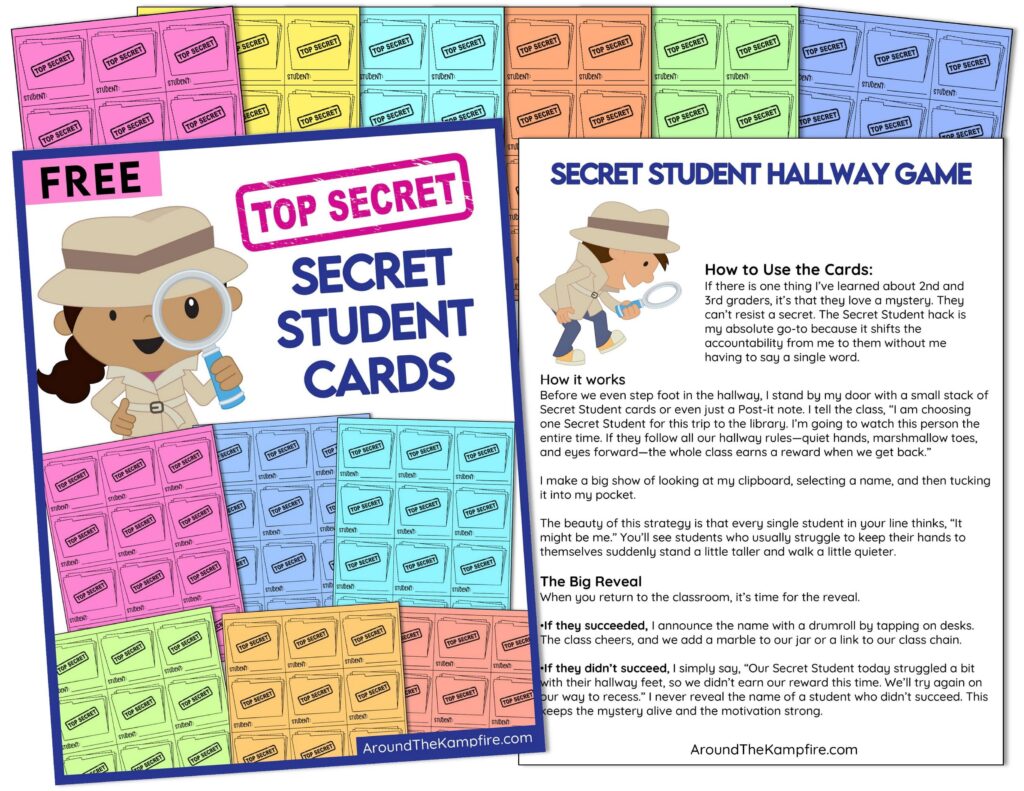
If there is one thing I’ve learned about 2nd and 3rd graders, it’s that they love a mystery. They can’t resist a secret. The Secret Student hack is my absolute go-to because it shifts the accountability from me to them without me having to say a single word.
- How it works: Before we even step foot in the hallway, I stand by my door with a small stack of Secret Student cards or even just a Post-it note. I tell the class, “I am choosing one Secret Student for this trip to the library. I’m going to watch this person the entire time. If they follow all our hallway rules—quiet hands, marshmallow toes, and eyes forward—the whole class earns a reward when we get back.”
I make a big show of looking at my clipboard, selecting a name, and then tucking it into my pocket.
The beauty of this strategy is that every single student in your line thinks, “It might be me.” You’ll see students who usually struggle to keep their hands to themselves suddenly stand a little taller and walk a little quieter.
The Big Reveal: When you return to the classroom, it’s time for the reveal.
- If they succeeded, I announce the name with a drumroll by tapping on desks. The class cheers, and we add a marble to our jar or a link to our class chain.
- If they didn’t, I don’t shame the student. I simply say, “Our Secret Student today struggled a bit with their hallway feet, so we didn’t earn our reward this time. We’ll try again on our way to recess.” I never reveal the name of a student who didn’t succeed. This keeps the mystery alive and the motivation strong.
Tip: Grab the FREE download below and keep a small jar of Secret Student name cards pre-cut on your desk so you can grab one quickly. To make it extra special, the Secret Student can get a Hallway Hero sticker or be the first one to line up for the next activity.
Free Hallway Management Game
Strategy 2: Marshmallow Toes and Bubbles
This hallway management strategy is a dual-sensory approach that addresses the two biggest hallway challenges: heavy feet and chatty mouths. A classic 2nd-grade favorite. Tell students to walk on marshmallow toes and keep a bubble in their cheeks so they can’t talk.
- Marshmallow Toes: Ask students to imagine their feet are made of soft, squishy marshmallows. To keep the marshmallows from making noise, they must walk lightly from toe to heel. This naturally slows their pace.
- The Bubble: Tell students to catch a bubble by puffing out their cheeks slightly. This creates a physical barrier to talking because they can’t lose their bubble if their mouth is closed.
Why it works: It turns “be quiet” into a playful game. If a student starts talking, you don’t need to correct them out loud. Just point to your cheek to remind them to catch their bubble again.
Strategy 3: The Shadow Method
The Shadow Method taps into students’ love for stealth and imagination. It shifts the focus from following rules to mastering a skill.
- The Challenge: Students walk like shadows—completely silent and almost invisible. Shadows don’t make noise or bump into things.
- The Goal: The ultimate win is passing another classroom or hallway monitor without being noticed.
Why it works: It gamifies the transition. Instead of feeling restricted, students feel like they are on a secret mission. It encourages awareness of their movements and surroundings.
Strategy 4: Visual Cues
Using hand signals instead of verbal reminders helps maintain quiet without adding more noise.
- Peace Sign for Quiet: Raise two fingers. When students see it, they mirror the signal and stop talking. It spreads silently through the line.
- Fingers on Lips: A finger over the lips signals silence. Pair it with an expectant look or a hand behind the back to reinforce structure.
Why it works: It reduces teacher talk and keeps students focused on visual cues instead of distractions.
Keeping Your Class Quiet in the Hallways Recap
Hallway management and mastering transitions is less about control and more about creating a classroom culture where how we move matters just as much as how we learn. These strategies—Marshmallow Toes and Bubbles, The Shadow Method, and Visual Cues—tap into students’ natural desire for fun, mystery, and independence. They transform what could be a loud, stressful transition into a smooth and engaging routine.
Looking for more classroom management help with those tricky classroom transitions? Check out my other top classroom management posts!
Now that you’ve got hallway management down, let’s manage the end of the day like a pro!





Leave a Comment